A sudden impact, an awkward catch, or a simple kitchen accident can leave you with a throbbing, swollen, and incredibly painful finger. In these moments, your first thought might be about the pain, but the second should be about proper healing. A finger injury, whether it’s a minor sprain or a clean break, needs stability to recover correctly. This is where a simple yet highly effective medical device comes into play: the finger splint. It acts as a supportive external skeleton, giving your finger the protection and rest it needs to mend itself without complication.
What Exactly is a Finger Splint?
Think of a finger splint as a mini cast for your finger. Its main job is to immobilize an injured joint or bone. By keeping your finger in a straight and protected position, a splint prevents you from accidentally moving it in a way that could cause more damage or disrupt the healing process. This immobilization reduces pain, decreases swelling, and helps the delicate tissues, tendons, and bones align properly as they heal.
Unlike a hard cast that encircles an entire limb, a finger splint is typically a more focused device. It’s often made from a hard material like plastic or padded aluminum on one side, and secured with Velcro straps or medical tape. This design provides rigid support where it’s needed most while still being relatively lightweight and easy to wear. Using the correct finger splint is a critical step in turning a painful injury into a distant memory.
When is a Finger Splint Necessary? Common Conditions and Injuries
You might need a finger splint for a variety of reasons, ranging from sports injuries to chronic conditions. A doctor is the only person who can definitively diagnose your injury and prescribe the right treatment, but these are some of the most common situations where a finger splint is used.
Finger Fractures (Broken Fingers)
If you’ve broken a bone in your finger, immobilization is key. A fracture needs time for the two ends of the bone to knit back together. A finger splint holds the bone in proper alignment, promoting correct healing and preventing a deformity. For simple, non displaced fractures, a splint might be the only treatment needed.
Sprains and Strains
A sprain happens when you stretch or tear a ligament (the tough bands connecting bones), while a strain involves an injury to a muscle or tendon. Both can be extremely painful and limit your finger’s movement. A finger splint provides rest for the injured tissues, allowing the inflammation to go down and the healing to begin without constant re injury.
Jammed Fingers
This is a classic injury in sports like basketball or volleyball. A jammed finger occurs when the tip of the finger is pushed back toward the hand, causing a sprain to the knuckle joint. It can be surprisingly painful and lead to significant swelling. Buddy taping or a simple finger splint can offer the support needed to let it heal over a week or two.
Trigger Finger (Stenosing Tenosynovitis)
Trigger finger is a condition where a finger gets stuck in a bent position and then snaps straight, like a trigger being pulled and released. This is caused by inflammation narrowing the space within the sheath surrounding the tendon. Wearing a specific type of finger splint, especially at night, can keep the affected finger in an extended position, preventing it from locking and allowing the tendon to rest and the inflammation to subside.
Mallet Finger (Baseball Finger)
Mallet finger happens when you can’t straighten the end joint of your finger. It’s typically caused by a forceful blow to the tip of an extended finger, which damages the extensor tendon. The standard treatment is to immobilize the fingertip in a straight position continuously for six to eight weeks using a specialized device known as a Stack splint. This specific finger splint is crucial for allowing the tendon to heal correctly.
Boutonnière Deformity
This injury involves a bent middle joint and a hyperextended end joint of the finger. It can result from a cut to the top of the finger or from arthritis. A finger splint is used to keep the middle joint straight, allowing the central slip of the extensor tendon to heal.
The Ultimate Guide to Finger Splint Types
Not all finger injuries are the same, so it makes sense that not every finger splint is the same. They come in various shapes and sizes, each suited for a specific purpose. They generally fall into two main categories: static splints, which hold the finger completely still, and dynamic splints, which allow for some controlled movement.
Static Splints (Immobilization Splints)
These are the most common types of splints you’ll find. Their purpose is to keep one or more joints in a fixed position.
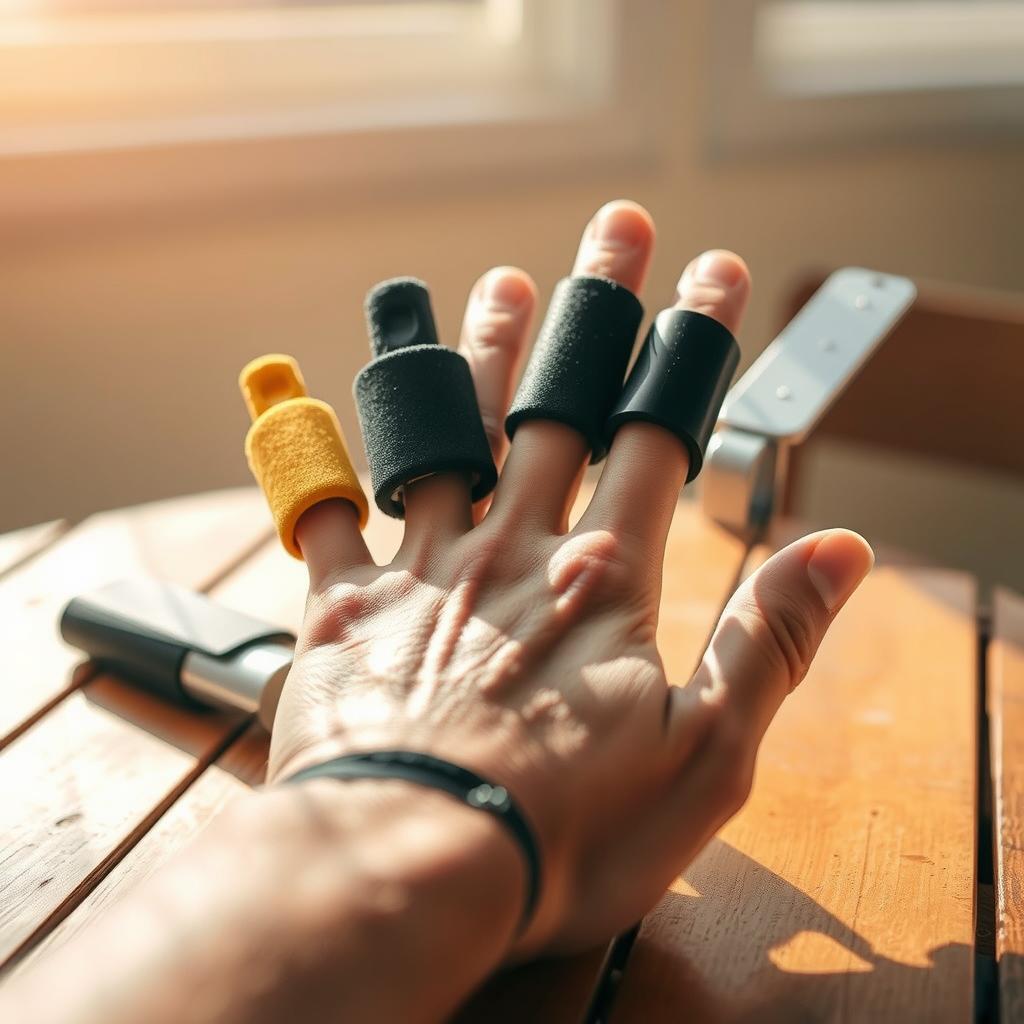
- Buddy Tapes/Splints: This is the simplest finger splint. The injured finger is taped to a healthy finger next to it. The healthy finger acts as a natural splint, preventing the injured one from moving too much. It’s often used for minor sprains or fractures of the smaller fingers.
- Stack Splint: This is a plastic, thimble like splint that slides over the tip of the finger. It’s designed specifically for treating Mallet Finger by holding the distal interphalangeal (DIP) joint the last joint of the finger in a straight, slightly hyperextended position.
- Gutter Splint: This splint is shaped like a “U” or a gutter. The finger rests in the channel, and the splint is secured with tape or straps. It provides firm support along one side of the finger and is commonly used for fractures in the main part of the finger (the phalanges).
- Frog Splint: This type of finger splint has padded aluminum arms that can be bent around the finger to hold it in the desired position. It provides stability on both the top and bottom of the finger and is often used for sprains and stable fractures.
- Finger Cot/Cap: This isn’t a true immobilization splint but rather a protective covering. It caps the end of the finger to protect it from bumps or cuts after an injury, especially if the nail bed is damaged.
Dynamic and Functional Splints
These splints are more specialized and are often used during rehabilitation to help regain movement after an injury or surgery.
- Spring Loaded Splints: A dynamic finger splint might have springs or elastic components that apply a gentle, continuous force to help stretch a stiff joint. They are used to improve range of motion after a finger has been immobilized for a long time.
- Oval 8 Splints: These are small, plastic, figure eight shaped rings that can be worn in different ways to treat various conditions. They can block a joint from bending too far (hyperextension) in cases of Swan Neck Deformity or limit bending for trigger finger. They are lightweight and allow for good hand function.
Here’s a quick reference table to help you understand which splint is often associated with which condition:
| Splint Type | Common Use Cases | Material |
|---|---|---|
| Buddy Tapes | Minor sprains, stable fractures in non index fingers | Medical Tape |
| Stack Splint | Mallet Finger | Perforated Plastic |
| Gutter Splint | Phalangeal (mid finger) fractures, severe sprains | Padded Aluminum, Plastic |
| Frog Splint | Joint sprains, stable fractures | Padded Aluminum |
| Oval 8 Splint | Trigger finger, arthritis, swan neck deformity | Molded Plastic |
How to Choose the Right Finger Splint
With so many options, picking the correct finger splint can seem confusing. Following these steps will help you make the right choice for your recovery.
1. Consult a Healthcare Professional
This is the most important step. Self diagnosing a finger injury can be risky. What feels like a simple jam could be a fracture that needs specific medical attention. A doctor or physical therapist can accurately diagnose the problem and recommend the exact type of finger splint you need for proper healing.
2. Match the Splint to the Injury
Once you have a diagnosis, you can select the appropriate device. As we’ve discussed, a Stack splint is the go to for Mallet Finger, while a Gutter splint is better for a fracture in the middle of the finger. Using the wrong type of finger splint can be ineffective or even harmful.
3. Prioritize Sizing and Fit
A finger splint should be snug enough to immobilize the finger but not so tight that it cuts off circulation. A poorly fitting splint can cause more pain, numbness, tingling, or skin irritation. Many over the counter splints are adjustable, but for others, you may need to measure your finger to get the right size. Your finger should feel supported, not strangled.
4. Consider the Material
Most splints are made from plastic or foam padded aluminum. Look for materials that are breathable to reduce sweat and skin maceration. Neoprene splints offer compression and warmth but less rigid support. The right material depends on the level of immobilization required for your specific injury.
Tips for Wearing and Caring for Your Finger Splint
Once you have the right finger splint, using it correctly is essential for a smooth recovery.
- Follow Your Doctor’s Orders: Your doctor will tell you how many hours a day and for how many weeks you need to wear your finger splint. For some injuries like Mallet Finger, continuous wear is absolutely critical. For others, you may be able to remove it for gentle cleaning.
- Keep It Clean and Dry: Unless specified otherwise, you should try to keep your splint dry. Moisture trapped against the skin can lead to irritation or infection. You can clean most splints with a cloth, soap, and water, but make sure it is completely dry before putting it back on.
- Watch for Warning Signs: Check your finger regularly. If you notice increased pain, swelling that doesn’t go away, numbness, tingling, or a change in your skin color (like turning blue or white), the splint is likely too tight. Loosen it immediately, and if the symptoms don’t resolve, contact your doctor.
- Sleeping with Your Splint: You will likely need to wear your finger splint while you sleep to prevent accidental bending or re injury. It might feel awkward at first, but it is a critical part of the healing process.
Frequently Asked Questions (FAQ)
Can I get a finger splint wet?
It depends on the material. Most basic foam and aluminum splints should be kept dry to prevent skin breakdown. If you must get your hands wet, you can cover the splint with a plastic bag secured with a rubber band. Some plastic splints, like a Stack splint, can be worn while washing hands, but you must remove them and dry the finger and the splint thoroughly afterward.
How tight should a finger splint be?
It should be snug enough to prevent movement in the injured joint but not so tight that it causes discomfort or cuts off blood flow. A good rule of thumb is that you should be able to slide the tip of a pencil between the splint and your skin. Your fingertip should remain warm and pink.
Can I buy a finger splint over the counter?
Yes, many types of finger splints are available at pharmacies, medical supply stores, and online. For minor sprains or jams, a simple over the counter splint may be sufficient. However, for a suspected fracture or a more complex injury, it’s vital to get a medical diagnosis before purchasing a finger splint.
Should I wear my finger splint all day?
This is entirely dependent on your doctor’s instructions. Severe injuries and fractures often require continuous wear, 24/7. Milder sprains may only require wearing the splint during activities that could aggravate the injury. Always follow the medical advice you are given.
Conclusion
A finger splint is a fundamental tool in hand injury recovery. From the simplicity of buddy taping to the specific design of a Stack splint, these devices provide the necessary support and protection for bones, ligaments, and tendons to heal effectively. Understanding the different types and their purposes empowers you to take an active role in your recovery. Always remember that the first and most important step after any significant finger injury is to seek a professional medical diagnosis. Choosing and using the correct finger splint based on that diagnosis will get you back to using your hands pain free as quickly and safely as possible.