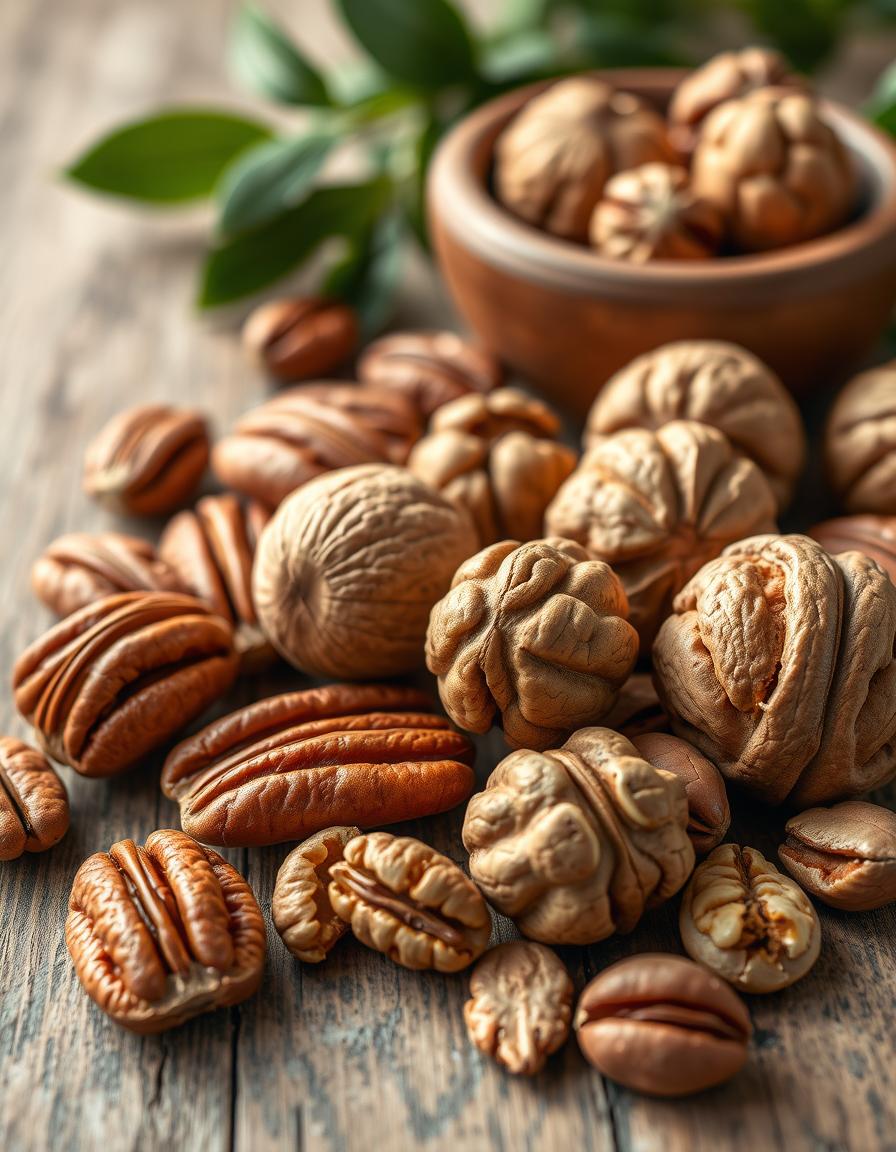
Nuts are a delicious, crunchy snack packed with nutrients, but choosing between them can sometimes be tricky. Pecans and walnuts are two popular options that often show up in recipes, snacks, and breakfast bowls. Both offer health benefits and unique flavors, but which one is truly healthier? By exploring the pecans vs walnuts nutrition, we can understand their differences and decide which nut fits better into your diet.
Nutritional Profiles: Pecans and Walnuts Side by Side
Let’s begin by comparing the basic nutrition facts for pecans and walnuts. Below is a table showing the key nutrients found in a typical 1-ounce (28 grams) serving of each nut.
| Nutrient | Pecans (1 oz) | Walnuts (1 oz) |
|---|---|---|
| Calories | 196 | 185 |
| Protein (grams) | 2.6 | 4.3 |
| Fat (grams) | 20 | 18.5 |
| Carbohydrates (grams) | 4 | 3.9 |
| Fiber (grams) | 2.7 | 1.9 |
| Vitamin E (mg) | 0.4 | 0.2 |
| Magnesium (mg) | 34 | 45 |
| Omega-3 Fatty Acids (grams) | 0.3 | 2.5 |
Fat Content and Heart Health
Both pecans and walnuts are rich in healthy fats, but the type of fat differs. Walnuts stand out for their high omega-3 fatty acid content, which is great for heart health and reducing inflammation. A single ounce of walnuts packs around 2.5 grams of omega-3s, compared to just 0.3 grams in pecans. This makes walnuts a fantastic choice if you’re looking to boost your intake of these essential fats.
Pecans, on the other hand, have more monounsaturated fats, which also support heart health by lowering bad cholesterol levels. These fats are the same type found in olive oil, making pecans a tasty way to promote a healthy heart.
Cholesterol and Antioxidants
Both nuts help reduce LDL cholesterol—the “bad” kind—while increasing HDL cholesterol, the “good” type. Pecans contain a unique mix of antioxidants, including vitamin E, which protect your body from damage caused by free radicals. Walnuts have antioxidants too but are particularly well-known for their powerful polyphenols, which contribute to lowering oxidative stress.
Protein and Fiber: Which Nut Fuels You Better?
Looking at protein, walnuts have the upper hand, offering almost twice as much as pecans in the same serving size. Protein is essential for muscle repair and keeping you full between meals. For those seeking to add plant-based protein to their diet, walnuts are a smart pick.
Regarding fiber, pecans provide more, which aids digestion and promotes a sense of fullness. Eating fiber-rich foods helps keep your digestive system running smoothly and can even lower your risk of certain chronic diseases.
Vitamins and Minerals
Pecans are an excellent source of magnesium and vitamin E, both important for immune support and skin health. Walnuts also contain magnesium but generally come with higher amounts. The difference isn’t huge, though, so both nuts contribute valuable nutrients to your meals.
Calorie Considerations and Weight Management
If you’re counting calories, pecans pack a bit more energy per ounce—196 calories versus 185 in walnuts. That’s because they have slightly more fat. However, the calorie difference is small, and both nuts can fit well into a balanced diet when eaten in moderation.
What’s interesting is that nuts, despite being calorie-dense, have been linked to weight management. They can help curb hunger and reduce the urge to snack on less healthy foods. So don’t shy away from pecans or walnuts even if you want to keep your weight in check.
How to Use Pecans and Walnuts in Your Diet
Both nuts are incredibly versatile. Pecans’ rich, buttery flavor shines in desserts like pecan pie or sprinkled atop salads. Walnuts bring a slightly bitter edge and crunch that works well in oatmeal, baked goods, and pesto sauces.
Here’s a quick list of tasty ideas:
- Add chopped pecans to your morning yogurt or smoothie bowl.
- Mix walnuts into your homemade granola or trail mix.
- Use pecans or walnuts as a crunchy topping for roasted vegetables.
- Incorporate them into salads for added texture and nutrients.
For those who enjoy cooking, there’s a great trick to prepare eggs quickly and healthily. If you want a fast way to get protein along with your nuts, check out this guide on instant pot hard-boiled eggs. It’s a neat hack for a nutritious start to your day!
Allergies and Sensitivities
It’s important to remember that tree nuts, including pecans and walnuts, are common allergens. If you’ve never eaten these nuts before, it’s wise to try a small amount at first. Allergic reactions can range from mild itching to more severe symptoms, so always be cautious.
Summary of Pecans vs Walnuts Nutrition
| Aspect | Pecans | Walnuts |
|---|---|---|
| Calories | Higher (196 per oz) | Lower (185 per oz) |
| Protein | Lower (2.6 g) | Higher (4.3 g) |
| Fiber | Higher (2.7 g) | Lower (1.9 g) |
| Omega-3 Fatty Acids | Low (0.3 g) | High (2.5 g) |
| Antioxidants | Vitamin E-rich | Polyphenol-rich |
Conclusion
So, which nut wins the health crown? The answer depends on your goals. If you want more protein and omega-3 fats, walnuts are the way to go. Pecans offer more fiber and vitamin E, with a rich buttery taste that’s hard to beat. Both nuts contribute heart-healthy fats and antioxidants, making them beneficial choices.
Whichever you pick, enjoy them in moderation as part of a balanced diet. Remember that variety is key, so alternating between pecans and walnuts can give you a range of nutrients. And if you ever want a quick, nourishing breakfast that pairs well with nuts, try out instant pot hard-boiled eggs for a hassle-free protein boost.

Timo is the founder of LiteDietPlan.com, where smart nutrition meets simple living.